
Paris, Part III
It took me 3 days and one long walk around the Impressionist haunts of Montmartre to fall in love with Paris.
I am extremely fascinated by art history, particularly modern art history. Not just because of the skill, discipline, and study involved in the creation of art over the ages, but because of the unique emotional insight into what life had been like in another time and place.
A couple of months ago, I had a conversation with my friend Natacha about how much more honest art history is, compared to political history. Some movements make zero sense when taken out of their socio-political contexts (Dadaism, for example!) but are quite thought-provoking once you consider the environments in which they were created.
This was made all the more apparent to me once I got to explore the richness of Paris’ tangible cultural heritage.
Excerpt from my travel journal, dated August 21, 2016:

I arrived at my walking tour group’s meeting point much too early, so I had ample time to have a nice, big breakfast right in front of the iconic Moulin Rouge.
The sun was coming in and out of the clouds, and I could see small patches of blue in an otherwise overcast sky. I prayed it wouldn’t rain, as it had been for the last few days.
Montmartre
I was basking in a little ray of sunlight as our French tour guide, Marie, arrived. She was a tiny little thing, quite pretty, and was very funny with a sharp, self-deprecating wit. She would make occasional haughty comments in mock stereotypical Parisian fashion. When we started our tour, it was obvious that she loved French art, too.
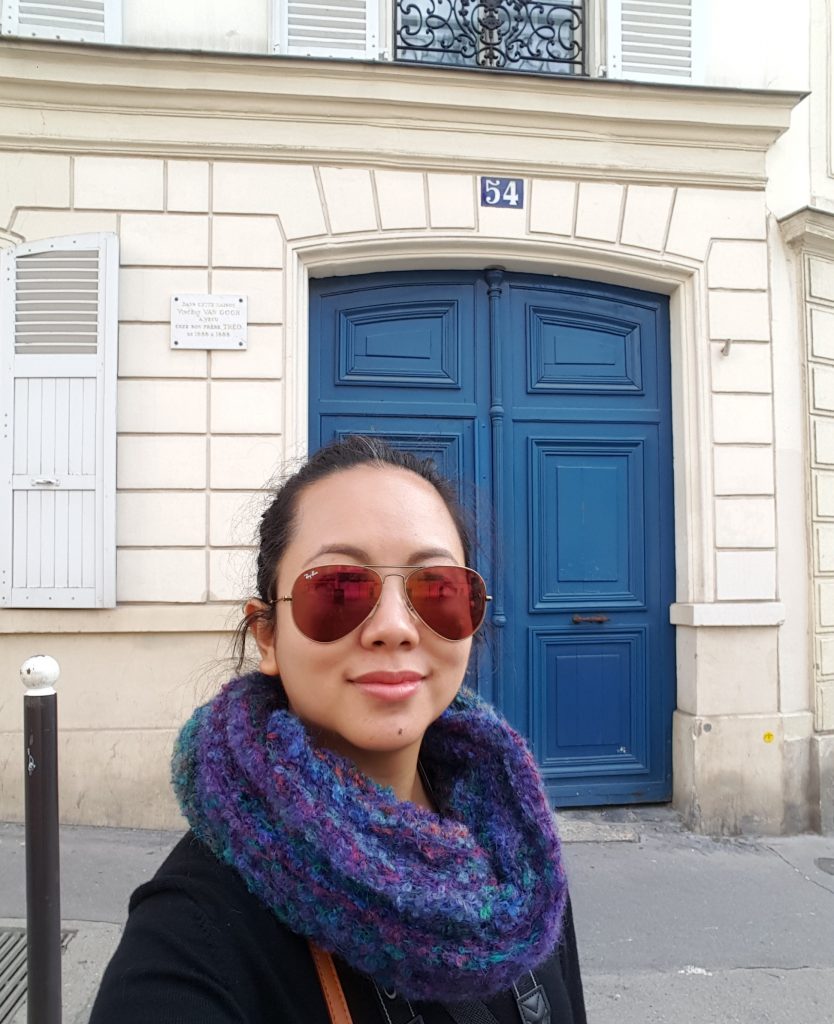
Montmartre was the centre of Bohemian artist culture in France from the late 19th century to the early 20th century. While “civilized” society in the old city of Paris kept up a facade of propriety in the daytime, they often went on secret nights out in the seedier Montmartre, where they could let their hair down and have a wild time in the cabarets. The likes of Van Gogh, Renoir, and Degas were regulars in the area (we actually stopped at the door of Van Gogh’s apartment where he had lived with his brother Theo from 1886-1888, as well the Moulin de la Galette, which was the setting of Renoir’s masterpiece).
Now, however, as Marie pointed out to us, it’s become prime real estate for label-wearing hipsters. “They fancy themselves Bohemians, but I call them Bo-Bo. Bohemian bourgeois!” she said with an exaggerated sniff.
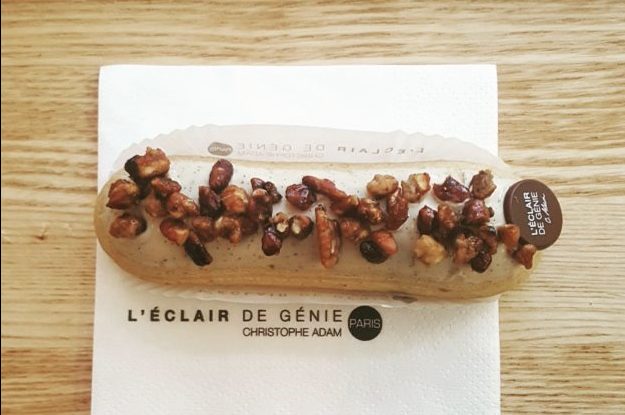
We were introduced to several cafes and restaurants in the area, including L’ Eclair de Genie, which had the BEST eclair I’ve ever had!
Marie took us to several other sites including Lapin Agile (The Nimble Rabbit) which is a cabaret that has been open since 1860, Le Bateau Lavoir (an art studio that was home to many early 20th century artists), and Sacré–Cœur Basilica, which stands at the highest point of the hill.
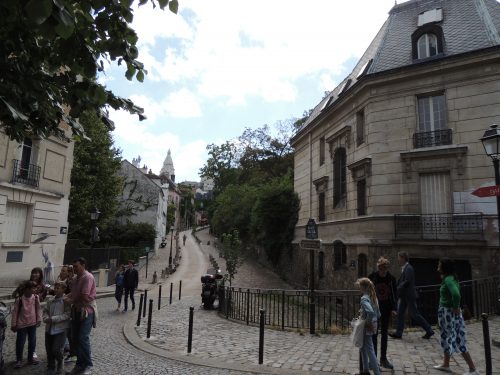
Montmartre (Mountain of the Martyr) was actually named for Saint Denis, a 3rd-century Christian missionary. It is said that he was captured by Gaulish druids, taken to the top of the highest hill in Lutetia (the old name of Paris) and decapitated with a sword.
Popular legend has it that either his head rolled down the hill to the spot where the church of St. Denis now stands, or that he stood up, picked up his head, and walked around preaching until he reached the same spot. Take your pick.
Musée d’Orsay
After the tour was over, I walked about 4km all the way to Musée d’Orsay, having received a free entry ticket as part of the tour package.
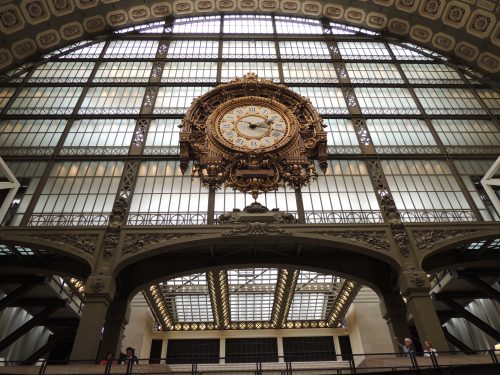
This impressive museum was originally a train station but was converted to its current usage in 1986. I’ve been to many art museums, but this one is definitely my favourite because of its awesome collection of early modern art.
Gorgeous works by Manet, Gauguin, Courbet, Renoir, Monet, Cézanne, Degas, and more hung on every wall and I greedily took in everything, amazed at being surrounded by so many pieces that I’ve admired for so long. It was quite a treat for me to see many of Monet’s garden paintings after having visited Giverny just the day before.
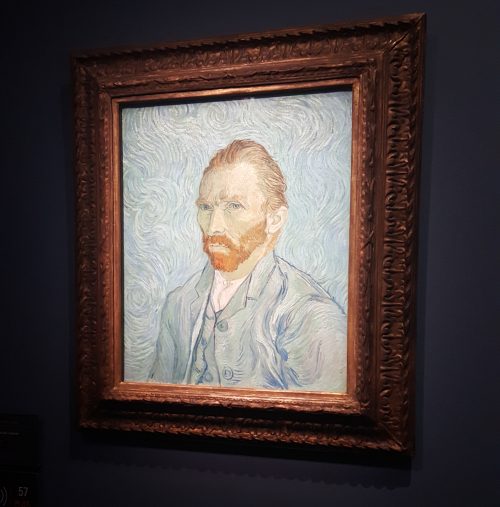
I rounded one corner – and there it was: my very first glimpse of a Van Gogh. His work has always resonated with something deep in my soul, something terribly dark and softly childlike all at the same time. He’s been my favourite artist for as long as I can remember, and I couldn’t help but break down in tears when I saw the brushwork up close. I felt somewhat embarrassed as I tried to control my sniffles in front of a particularly-judgmental tourist!
Typical Tourist
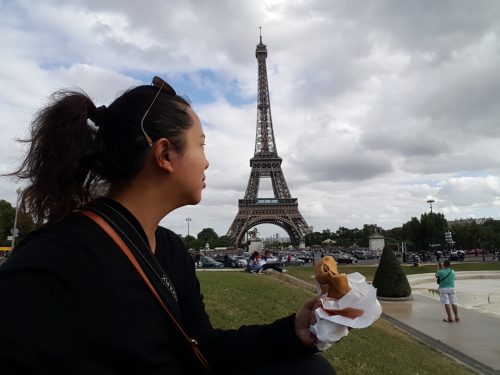
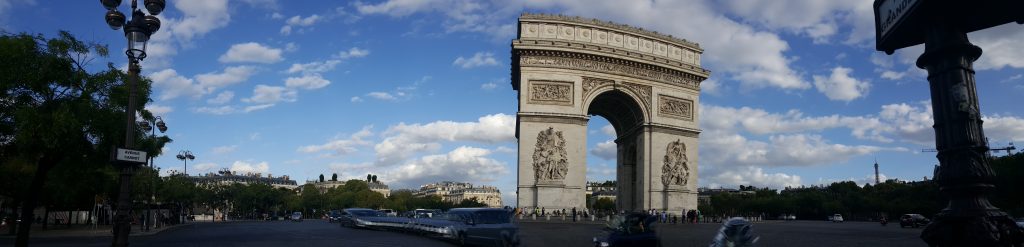
I spent the rest of the afternoon walking around all of the city’s greatest hits: the Eiffel Tower, Champs-Élysées, Arc de Triomphe. The weather had improved, and the sun peeked in and out of the thinning clouds. I took off my fuzzy scarf and strolled along the bank of the Seine, finally seeing the magic of Paris for the first time. I even steered into the skid and had my obligatory tourist photo with a crepe at the Eiffel Tower.
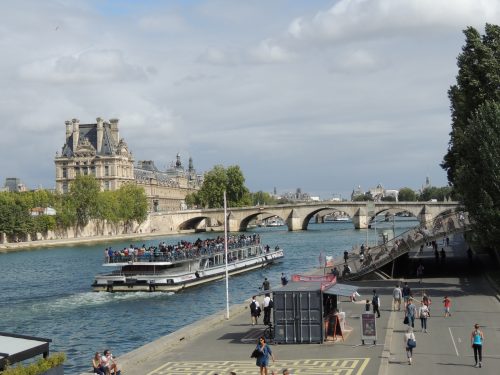
There is a reason why this city has inspired so many artists, books, movies, songs, and stories. Its history is rich, vibrant, passionate, raw, and unashamedly romantic. As much as I initially hesitated to say it, Paris really does live up to the hype.