
I hate doing anything that I’m not naturally good at.
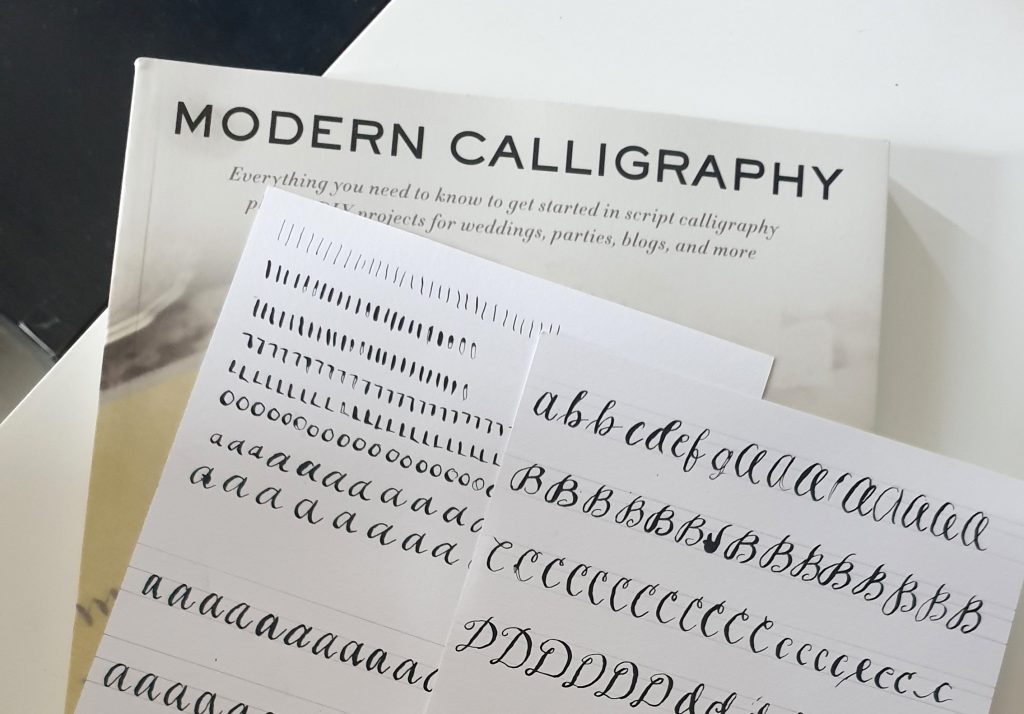
I’ve started many, many new hobbies but quickly lost interest when I realized that I sucked at them. I never went past beginner to intermediate skill level at guitar, clay sculpture, oil painting, tennis, poi dancing, yoga, and, more recently, calligraphy. A couple of years ago I bought a book on pen calligraphy. I was infatuated with the idea but soon realized it was a lot harder than it looked and grew bored with the tiresome practice sheets and frustrated that I was terrible at making neat and aesthetically pleasing scripts.
It is famously believed that it takes 10,000 hours to master any skill. Devote 3 hours a day to practicing it and it will take you almost ten years to reach that mark.
As children, we took on so many different new skills at the same time: walking, talking, reading, writing, typing. By the time we were ten years old, we were doing all of these perfectly, without even needing to think about it. And I think one of the reasons is that we were never afraid to be bad at anything.
As an adult, it becomes harder to start learning something new. Sure, there are physiological reasons for this, but I think there are also psychological reasons: we are afraid to look stupid and of being criticized, and we compare ourselves to others who are further along than we are and get discouraged. We also tend to be busier, without time to catch our breath amid the necessary day-to-day activities, let alone set aside for skill development that has nothing to do with our day jobs.
It was during an eight-hour bus ride from Barcelona to Avignon two years ago that I first started thinking about all this. Prior to my trip, I had been practicing my rusty Spanish (which I’ve been trying to learn on and off for many years – are you sensing a pattern?) using the Duolingo app. While going through several Spanish towns along the road to the border to France, instead of constantly looking at my phone, I tried my best to recognize words on the traffic signs, posters, billboards, and shop signs flying by. Most of the time I wasn’t successful. But sometimes I would internally cheer myself on when I did manage to read words or entire sentences or guess meanings through context clues and repetition.
(Pa…na…de…ría… I know that one! BAKERY! Yeah!)
I imagined this was how an excited six-year-old me must have felt as my teacher went through alphabet exercises and reading drills with my class. But I also imagined this scene from the 1995 classic, Billy Madison:
This scene is pure comedy gold, but it’s also how I irrationally expect people to react if they were to see me practicing something I’m not good at – and sometimes even things I’ve been doing all my life.
I’ve been drawing and doing visual art for as long as I can remember, and have been doing digital graphic design since I was 15 (and discovered how to download software illegally, haha). And yet, I often still find myself feeling anxiety and dread whenever I show any of my work to anyone because I never think it’s good enough.
It’s only when I remind myself that my work and what other people think of it has nothing to do with my worth and value that I can pull back and find calm. My work is only WHAT I DO, it’s not WHO I AM. God has given me so much freedom to do and learn and practice a vast range of things. I shouldn’t be afraid to do them just because of the possibility of perceived failure.
So a few days ago, I picked up a calligraphy pen and a 500-piece ream of Bristol paper and started creating these sloppy, blotted, childish ink strokes. It will be a long time before I can actually produce beautiful, flowing script effortlessly, but I hope to someday use this skill to create scripture art. Between that time and now, with these scrawled practice sheets, I will be reminded that it’s never about what I can produce, but about being willing to learn, improve, even fail, and try again.